Ice Dams and Your Chimney: How Ohio Ice Attacks Flashing, Crowns and Mortar
The ceiling stain that shows up at spring melt usually started months earlier, at the chimney. How ice dams form, why the flashing line is their favorite target, and what actually fixes it.
The short answer: ice dams turn your chimney into a water inlet
An ice dam is a ridge of ice that builds along the roof edge when heat escaping from the house melts snow on the upper roof, the meltwater runs down to the cold eave, and it refreezes there. Behind that ridge, water ponds — and ponded water looks for any opening it can find. A chimney is the biggest opening in the roof plane, and the flashing line where masonry meets shingles is the seam the water tests first. In the Ohio the cycle runs for months: snow loads in December, thaws and refreezes through January and February, and the damage quietly accumulates until spring melt pushes water through and a stain blooms on a ceiling or wall — often in a room that is not even under the chimney, because water travels along framing before it drips. By the time the stain appears, the leak has usually been active for weeks.
Why the flashing line fails first
Proper chimney flashing is a two-part system: step flashing woven into the shingles along the sides, a headwall piece across the top, and counterflashing cut into the mortar joints and folded down over it all, so water is always shed onto the layer below. It fails in predictable ways. The sealant at the counterflashing edge dries and cracks after years of freeze-thaw. Mortar joints around the flashing erode until the metal can move. On older Ohio homes the counterflashing was sometimes only face-nailed and caulked instead of being set into a reglet cut in the masonry — a shortcut that holds for a few seasons and then lets go. Ice makes every one of these weaknesses worse: water that ponds behind a dam sits against the flashing for days instead of running off in minutes, and ice forming inside a small gap pries it wider with every cycle. That is why a chimney that never leaked in summer rain can leak badly in March.
The crown and the mortar are part of the same story
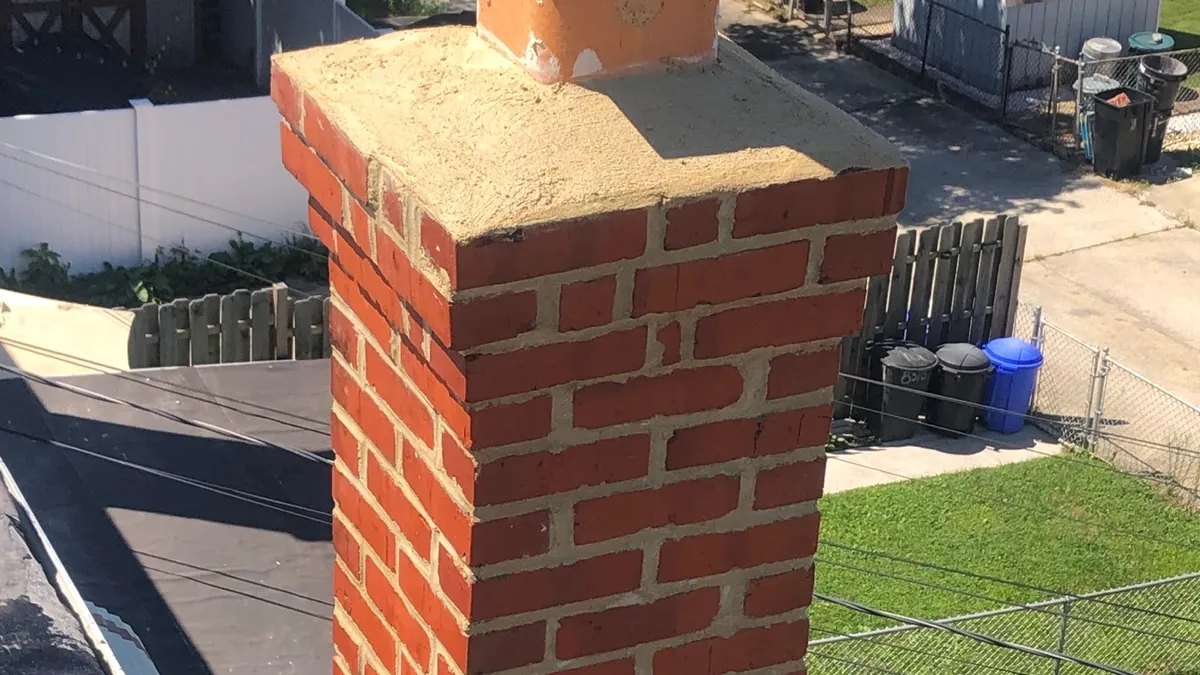
Ice dams get the blame, but they usually have accomplices at the top of the chimney. The crown — the sloped concrete or mortar cap that sheds water off the chimney's top surface — cracks under freeze-thaw, and every crack is a funnel: water enters, freezes, and widens the split, until meltwater is running down inside the masonry itself. Mortar joints between bricks do the same thing more slowly, wicking water into the wall of the chimney where freezing spalls the brick faces off in flakes. From the ground, none of this is visible; from the roof it is obvious. This is also why painting over a ceiling stain never fixes a chimney leak — the stain is the last stop of a path that started at the crown, the flashing, or a failed joint, and until the entry point is repaired the water will be back with the next thaw.
What a real repair looks like — and what it doesn't
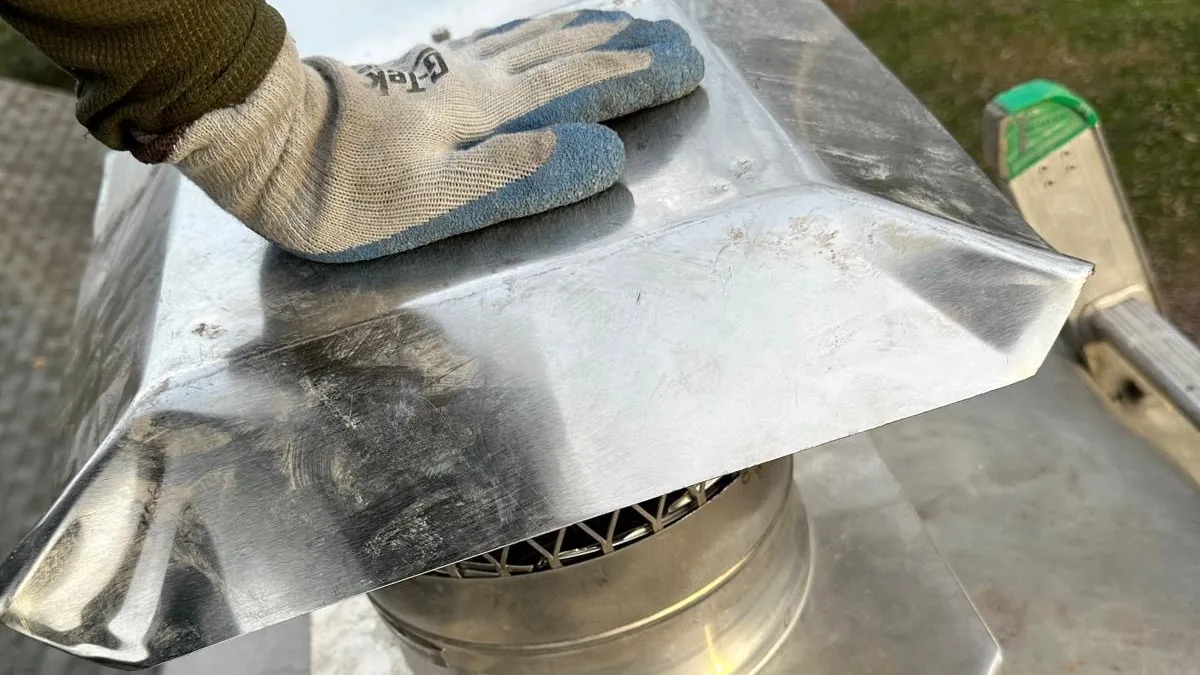
A real flashing repair starts with diagnosis, not a caulk gun. We trace the leak to its actual entry point — flashing, crown, cap, mortar or chase cover — because each one has a different fix, and sealing the wrong one just moves the leak. Failed counterflashing is cut out and re-set into the mortar joint properly; cracked crowns are rebuilt with a proper slope and drip edge or sealed with a flexible crown coating when the structure is still sound; failed joints are ground out and repointed with matched mortar; and a chimney with no cap gets one, because an open flue is a direct rain and snow inlet. What does not work: roofing tar smeared over the flashing, a bead of hardware-store caulk along the seam, or a coat of paint on the stain. Those are the three things we remove most often on the way to doing the repair right. The final price is confirmed in writing after we inspect.
Before the snow loads: the fall checklist that prevents it
Most ice-dam chimney damage is preventable with one fall visit. Have the crown inspected for hairline cracks and sealed or rebuilt before they widen. Have the flashing checked where it meets the masonry — the sealant line and the mortar around it — and renewed while it is still a small job. Keep the cap sound and the flue swept: a working fireplace also warms the flue, and a house whose chimney is in service all winter sheds meltwater more predictably than one with a cold, blocked flue. And if you have had ice dams before, tell us — where the dam forms on your roof tells us exactly which seam to inspect hardest. If spring has already left a stain, do not wait for next winter: water in the wall assembly all summer feeds mold and rots framing. Call Eagle Chimney Ohio at (614) 412-3139 or request a free estimate through our contact form, and we will trace the leak to its real source and repair the cause, not the stain.
Related Services & Service Areas
Need Help With This?
Our related service: Flashing & Leak Repair — Most chimney leaks are born where the chimney meets the roof. We repair and replace step and counter flashing, seal the joint properly, and fix the leak at its source — not with a smear of tar.