Chimney Tuckpointing in Ohio: When the Mortar Gives Up Before the Brick Does
Brick lasts a century. Mortar does not. When Ohio mortar joints recess, crack and turn to sand, tuckpointing — grinding out the failed mortar and packing in fresh — is the repair that keeps water out and the stack standing.
The short answer: mortar is the sacrificial part of your chimney, and it wears out first
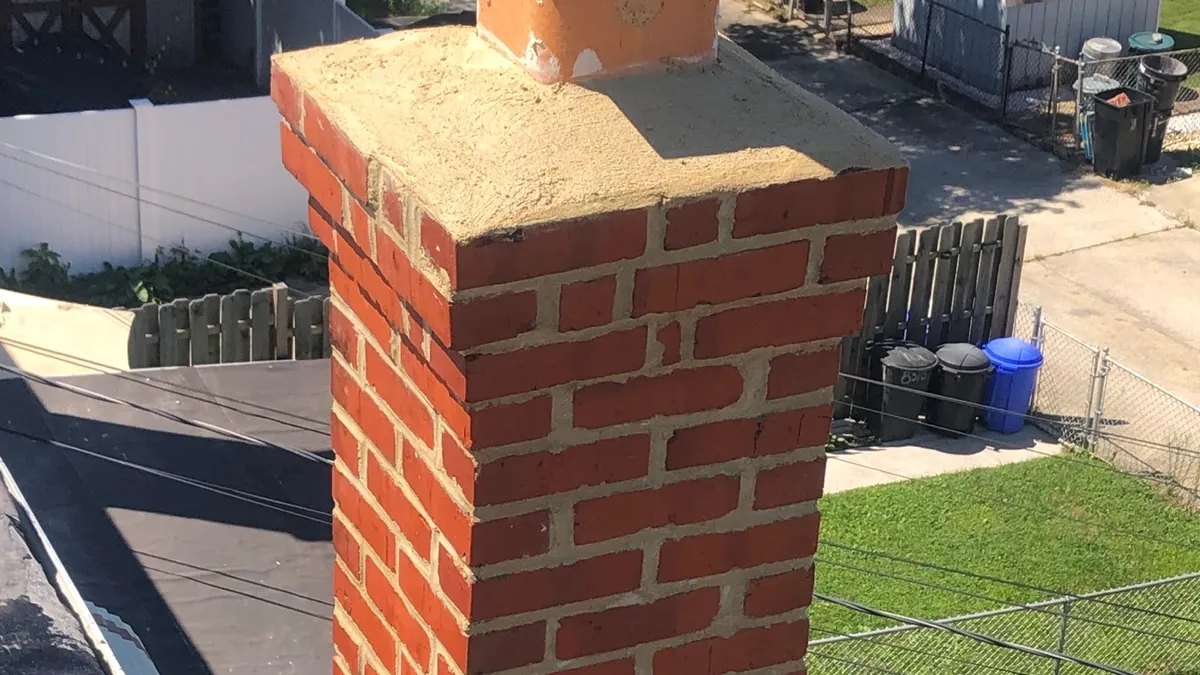
A masonry chimney is two materials working together: hard brick that can last a hundred years, and softer mortar joints that are designed to give first. That is not a flaw — mortar is meant to be the sacrificial layer, absorbing movement, weather and freeze-thaw so the brick does not have to. The trade-off is that mortar has a working life, commonly a few decades, and in Ohio that life is spent hard: rain soaking in all fall, freezing and expanding all winter, and baking dry all summer. When the joints recess, crack and crumble, the chimney does not just look tired — it starts drinking water through every joint, and the brick that was supposed to outlive us all begins to fail with it. Tuckpointing is the repair that resets the clock: the failed mortar is ground out to sound material and fresh mortar is packed in, restoring the joint's seal and its strength. In Columbus, Dublin and across Ohio, late November is when tired joints announce themselves, because the first freezes pry at every crack the fall rain filled.
How mortar fails in an Ohio winter — joint by joint
Mortar rarely fails evenly, and the pattern tells you where the water has been working. The top courses below the crown go first, because they take the most weather and sit under the part most likely to crack. Joints on the weather side — the face that takes wind-driven rain and the most sun after a freeze — recess and turn sandy years before the sheltered side. Hairline cracks along the joint edges let water in; that water freezes, expands, and widens the crack a fraction each cycle, until the joint is a shallow trough that collects water instead of shedding it. From the ground the late stages are unmistakable: joints visibly recessed an inch or more, mortar missing in chunks, white efflorescence staining where water travels through the wall and evaporates out, and eventually brick faces flaking and spalling because the saturated brick, not just the joint, is now freezing apart. A joint you can dig out with a key or a fingertip is not protecting anything — it is a water channel with brick on both sides.
Tuckpointing is not caulking, smearing, or painting over the problem
Homeowners are sometimes sold shortcuts, and mortar is where shortcuts fail fastest. Smearing a thin layer of new mortar over the face of a failed joint — without grinding out the dead material behind it — leaves a cosmetic skin bonded to crumbling mortar; it pops off within a season or two, often in sheets. Caulk and surface sealers are worse: they trap moisture inside a joint that needs to dry, and they hide the joint's condition while it keeps deteriorating underneath. Real tuckpointing is slower and dustier. The failed mortar is cut or ground out to a proper depth — to sound material, deep enough for the new mortar to lock in — the joint is cleaned and dampened, and fresh mortar matched to the original in strength and color is packed in layers and tooled to the profile that sheds water. Matching strength matters more than most people realize: mortar that is harder than historic brick forces freeze-thaw stress into the brick itself, which is how a repair meant to save a chimney in an older Highland Park, Como or Summit Avenue home ends up cracking the brick it was packed between. The right mortar is compatible with the brick, not just gray.
When tuckpointing is enough — and when the chimney is telling you more
Tuckpointing is the right repair when the brick is sound and the damage lives in the joints: recessed, cracked or missing mortar with solid brick faces and a stack that is still plumb and tight. The exact price is confirmed in writing after we see your chimney — the height and size of the stack, how much joint has failed, and roof access all move the final number. There are honest limits. Brick that is spalling through, cracked or crumbling needs replacing, not repointing around. A stack that leans or has stepped cracks running through brick and joint together is reporting movement that mortar alone will not fix. And tuckpointing a chimney whose crown is cracked or whose flashing has failed is sealing the walls while the roof leaks — the water entry at the top has to be fixed too, which is why crown repair so often pairs with joint work, and why breathable waterproofing comes last, only after the structure is sound, to keep repaired masonry from soaking up the next decade of rain and snowmelt. An honest mason will show you photos of the joints up close and tell you plainly which of those situations is yours.
The honest safety note — and the ground-level check you can do this week
Here is the safety note, plainly: failed exterior mortar is mostly a water and structure problem, but the same freeze-thaw and water that open the outside joints work on the flue's inside mortar too, and a flue whose joints have opened can let heat and carbon monoxide reach places they should never reach. Open exterior joints also let the stack saturate, and a saturated stack deteriorates from the inside out through an Ohio winter — so a joint problem ignored in November is measurably worse by April, and the spring repair covers more courses than the fall one would have. Do the ground-level check this week: with binoculars, look at the joints just below the crown and on the weather side for recession, missing chunks and white staining, and note any mortar sand collecting at the base of the chimney after storms. If the joints are recessed, crumbling, or have never been repointed in an Ohio home of a certain age in Dublin, Westerville, Gahanna or Columbus, that is enough to act on. Call Eagle Chimney Ohio at (614) 412-3139 or request a free estimate through our contact form, and we will photograph the joints, show you exactly what shape they are in, and quote the tuckpointing in writing — and for a chimney due its annual check, our fall checkup pairs a chimney sweep with a Level 1 inspection in one visit.
Related Services & Service Areas
Need Help With This?
Our related service: Masonry & Tuckpointing — Mortar is a chimney's sacrificial layer — it's meant to wear so the brick doesn't have to. We repoint failing joints and rebuild damaged masonry with matched materials, so the repair disappears into the chimney.