Chimney Crown Repair in Ohio: The Concrete Cap That Keeps Water Out
The crown is the concrete slab on top of your chimney — and in Ohio it is the first part freeze-thaw cracks. What a sound crown does, how to spot a failing one from the ground, and when a repair beats a rebuild.
The short answer: the crown is your chimney's roof, and it takes the worst weather
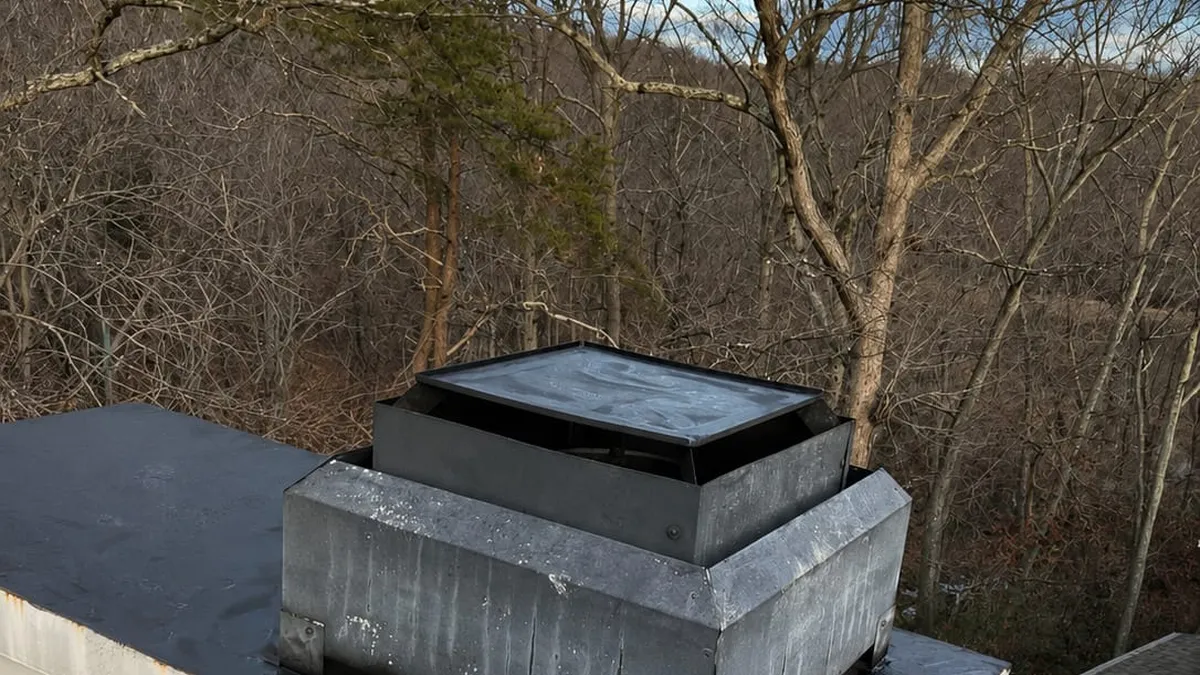
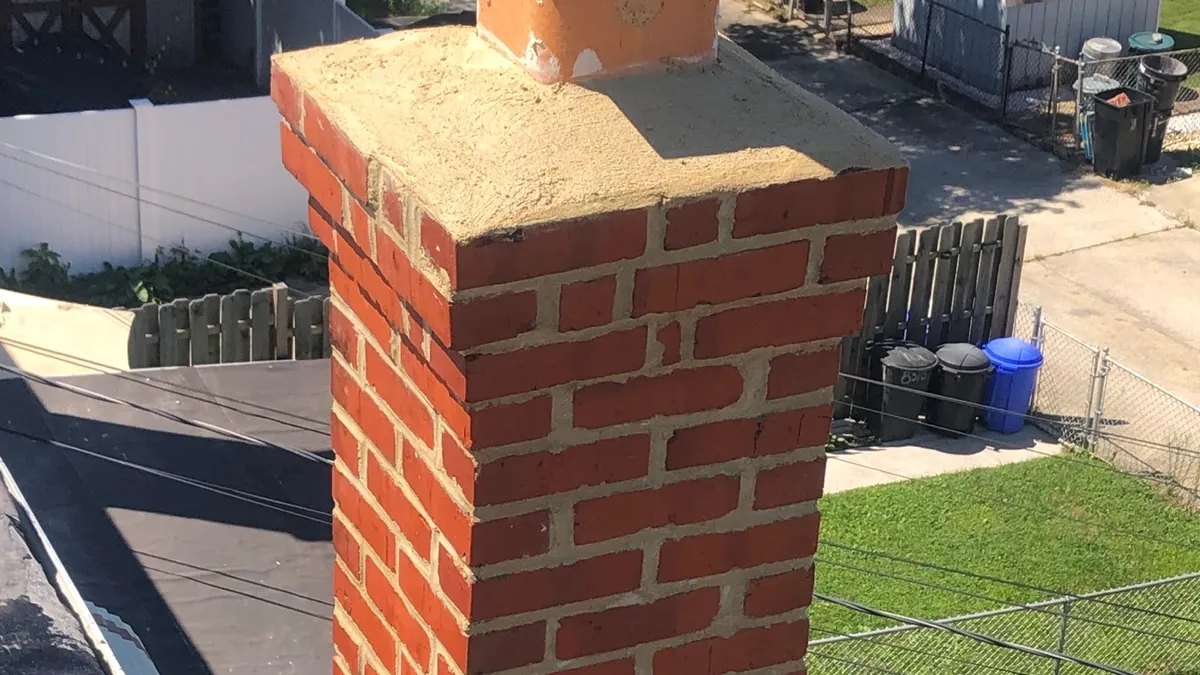
Every masonry chimney ends at the top with a crown — a slab of concrete or mortar that covers the top of the stack, seals around the flue, and sheds water off the edges so it falls clear of the brick below. It is a small part with an outsized job. The crown is the most exposed surface on the whole chimney: it takes rain straight down, holds snow for weeks, bakes in summer sun, and in Ohio it freezes and thaws dozens of times every winter. When a crown is sound, water never gets a foothold in the top of the chimney. When it cracks — and freeze-thaw eventually cracks almost every unprotected crown — it stops shedding water and starts funneling it straight down into the structure it was built to protect. In Columbus, Dublin and across Ohio, late November is when crown damage matters most: the stack is about to spend five months under snow that melts a little on every sunny afternoon and refreezes every night.
How a crown fails: hairline cracks, then open channels
Crowns rarely fail all at once. The first stage is hairline cracking — thin lines across the surface that open a fraction wider with every freeze, as water that soaked into the concrete expands into ice. Mortar-wash crowns, the thin skim coat many builders used instead of a properly formed concrete slab, fail faster: they crack in a map pattern and begin flaking within years rather than decades. The second stage is separation — the crown pulling away from the flue tile at the center, opening a ring-shaped gap that takes water directly down alongside the liner. The third stage is structural: chunks breaking off at the edges, the surface spalling and crumbling, and water no longer running off at all but pooling and soaking in. Each stage feeds the damage below it. Water entering a cracked crown saturates the top courses of brick, loosens mortar joints from the inside, rusts the damper and smoke shelf at the bottom of its path, and shows up inside the house as a damp firebox or a stain that nobody connects to a slab of concrete thirty feet up.
Five signs your crown is failing — most visible from the ground
You cannot inspect a crown properly from a ladder-free distance, but you can spot the evidence it leaves. First, look at the top courses of brick: white efflorescence staining, flaking brick faces, or mortar joints that are recessed and crumbling just below the top almost always mean water is entering from above — and the crown is the first suspect. Second, watch after rain: a crown that sheds properly throws water clear, while a failed one lets it sheet down the brick face, darkening the masonry in streaks. Third, inside the firebox, dampness after storms, rust streaks on the damper, or a puddle on the smoke shelf point at water traveling down the flue's outside — the crown-to-flue gap is a prime entry. Fourth, binoculars from the yard can reveal the obvious cases: visible cracks across the top surface, missing chunks at the corners, or a flue tile sitting noticeably proud because the crown around it has washed away. Fifth, know the age: an Ohio home in Dublin, Westerville, Gahanna or the older neighborhoods of Highland Park and Como whose crown has never been repaired is working with a slab that has survived thirty, forty or fifty freeze-thaw winters. Any one of these is reason enough for an inspection that includes eyes on the very top of the chimney.
Repair, recoat, or rebuild? The honest ladder of fixes
The right fix depends on how far the failure has gone, and an honest sweep will show you photos of your crown before recommending a rung on this ladder. Hairline cracks in an otherwise sound, well-formed crown can be sealed with a flexible crown repair coating — an elastomeric layer that bridges the cracks, stays flexible through freeze-thaw, and buys the crown many more seasons. That is a real repair, not a cosmetic one, provided the slab underneath is still solid and still sloped to shed water. A crown that is cracked through, separating from the flue, or built as a flat mortar wash that never shed water properly needs rebuilding: the failed material comes off and a new crown is formed in concrete with a proper slope, an overhang with a drip edge that throws water clear of the brick, and room around the flue tile for heat expansion. The exact price is confirmed in writing after we see your chimney — the size of the stack, its condition and roof access all move the final number. Where the water has already reached the brick and mortar below, tuckpointing follows — and breathable waterproofing comes last, once the structure is sound, to keep the repaired masonry from soaking up the next decade of rain and snowmelt.
The honest safety note — and why late fall is the decision point
Here is the safety note, plainly: a cracked crown is not an emergency tonight, but the water it admits does slow, compounding damage that is anything but cosmetic. Water reaching the liner degrades the mortar between tiles, and a flue with open joints can let heat and carbon monoxide reach places they should never reach. Water saturating the top of the stack also sets up the spring's spalling brick and the next ceiling stain. What a crown problem should never get is a smear of roofing tar or a tube of caulk across the cracks — rigid patches crack again within a season, trap moisture underneath, and make the eventual proper repair harder. Late November is the honest decision point: a coating repair needs a dry crown and temperatures that let it cure, and a rebuild needs mortar and concrete weather that Ohio is about to stop offering, so a crown found failing now gets triaged honestly — fixed if the window allows, protected and scheduled first in spring if it does not. Crown never checked, white staining under the chimney top, or a damp firebox after rain in a Columbus, Dublin or suburban home? Call Eagle Chimney Ohio at (614) 412-3139 or request a free estimate through our contact form, and we will photograph the crown, show you exactly what shape it is in, and quote the repair in writing — so the slab that roofs your chimney is ready for the snow sitting on it.
Related Services & Service Areas
Need Help With This?
Our related service: Chimney Crown Repair — The crown is your chimney's first line of defense against water. We repair cracked crowns and rebuild failed ones with the slope, overhang and drip edge that shed water the way they should.