Factory-Built Chimneys in Ohio: The Chase Cover Is the Roof You Forget
Not every Ohio chimney is brick. Factory-built fireplaces vent through a metal chase topped by a chase cover — and when that cover rusts through, water pours into the structure invisibly. How to spot it and what lasts.
The short answer: a prefab chimney has a metal roof, and it wears out
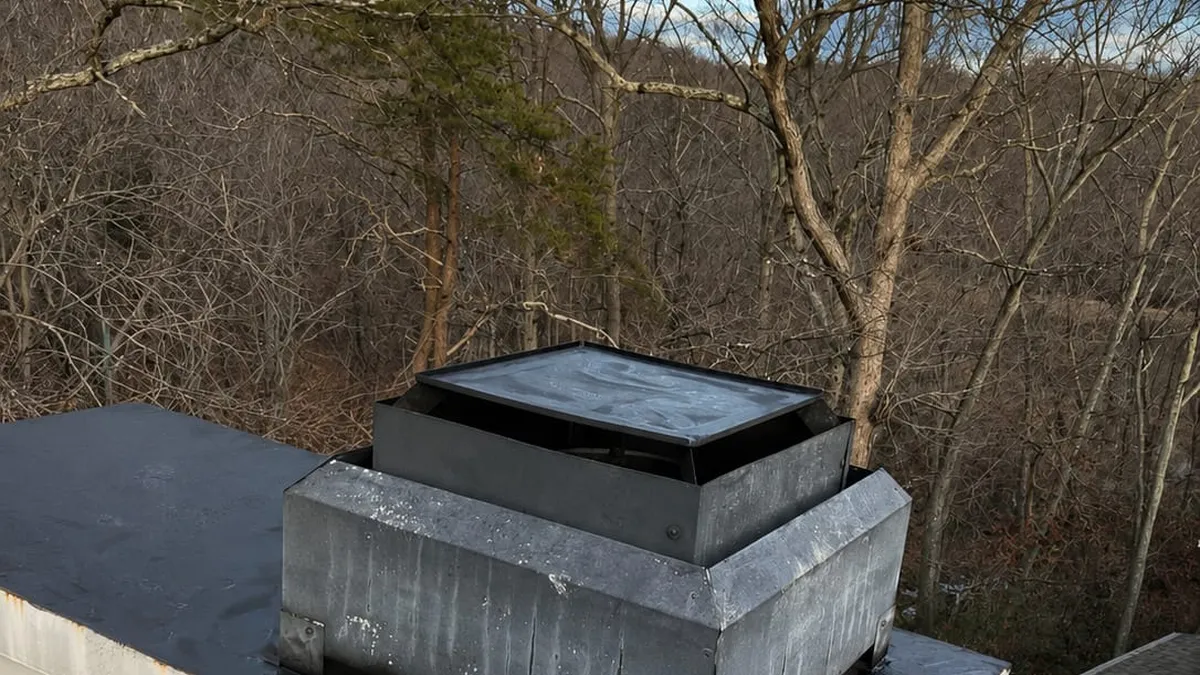
Drive through the newer subdivisions of Gahanna, Reynoldsburg, Lakeville, Maple Grove and Blaine and most chimneys you see are not masonry at all. Behind the siding or stucco is a factory-built fireplace system: a metal firebox, a metal flue, and a framed chase — essentially a tall wooden box — running up through the roof. The whole structure is topped by a chase cover, a flat metal pan that works as the chase's roof, with the flue poking through it and a chimney cap on top of the flue. That system is safe and proven when it is maintained, and it is in a large share of Ohio homes built from the 1980s onward. The catch is the cover itself: the galvanized covers builders install are a wear item. In Ohio weather they typically rust from the underside and around the flue opening, and when a chase cover fails it does not drip politely into a firebox — it lets water into the chase, where it rots framing and insulation out of sight for seasons before anyone knows.
How a chase cover fails — and why the rust streaks matter
A chase cover lives a hard life. It sits flat, so snow melts and refreezes on it, rain ponds in any low spot, and condensation forms on its underside every cold night. Galvanized steel gives up in stages: first a dull staining, then rust streaks bleeding down the siding below the chimney top — the single most useful warning sign a homeowner can spot from the ground — then pinholes, then seams and edges opening as the metal thins. Water entering those openings does not announce itself inside the house the way a masonry leak does. It soaks the top of the chase, wets insulation, rots the framing at the top plate and can work down inside the walls, feeding mold where no one can see it. By the time a stain appears on a ceiling or a musty smell shows up near the fireplace, the cover has usually been leaking for a long while. That is why prefab chimneys need the same annual look as brick ones — with the cover, not the mortar, at the top of the checklist.
Prefab is not masonry: what is different about care and repair
Homeowners sometimes assume a factory-built system needs no service because it makes less mess, or that any chimney repair approach applies to it. Neither is true. A prefab flue still builds creosote with wood burning and still needs sweeping and inspection on the same annual rhythm as a masonry flue. Its parts are model-specific: the cap, the cover and the flue sections are components of a listed system, so replacements have to match the system's requirements rather than whatever fits roughly. Clearances matter more, not less — the chase is wood framing around a hot metal flue, built to exact clearances that damaged or corroded components can compromise. And the repairs are different in kind: there is no tuckpointing on a chase, no crown to rebuild. The lasting fix for a failed cover is a new cover fabricated in stainless steel, sloped properly so water sheds instead of ponding, with the flue opening sealed and a sound cap above it. Stainless costs more once than galvanized did — and then, unlike the original, it effectively ends the cycle instead of restarting the rust clock.
Five checks a prefab owner can do from the ground and the hearth
You do not need a ladder for a first pass. First, look at the siding directly below the chimney top after rain: rust streaks running down from under the cover are the classic early warning. Second, check the cap from the yard with binoculars — it should sit straight and complete, with its mesh intact; a missing or tilted cap lets weather and animals straight into the flue. Third, inside, look and smell around the fireplace after a storm: a musty odor, dampness, or rust staining on the firebox or the surround after rain means water is traveling somewhere it should not. Fourth, watch the fire's behavior — a prefab flue blocked by a nest in an uncapped system smokes and drafts poorly just like a masonry one. Fifth, know your system's age: if the house was built in the 1990s or 2000s in places like Pickerington, Grove City or Hilliard and the cover has never been replaced, it is living on borrowed time whether it has leaked visibly yet or not. Any one of these is enough reason for an inspection that includes eyes on the top of the chase — our fall checkup pairs a chimney sweep with a Level 1 inspection in one visit, and the cover, cap and flue are part of what that visit reports on for a factory-built system.
The honest safety note — and when to replace, not patch
Here is the safety note, plainly: the risk in a failed chase cover is not only rot. Water corroding a metal flue from outside, and damaged components inside a wood-framed chase, both attack the separation between a hot flue and combustible framing that the whole system depends on. That does not make every rusty cover an emergency tonight — but it does mean patching is the wrong instinct. Surface sealant smeared over a rusted-through cover traps water under the patch and fails within a season or two, while the metal underneath keeps thinning. When a cover has pinholes, open seams or rust-through around the flue, replacement in stainless is the honest fix, quoted in writing after we see the chase — the chase size, roof access and the cap's condition all move the final number, and we confirm the exact price before any work begins. Rust streaks under your chimney top, a cover that has never been replaced, or a prefab fireplace that has not been inspected in years? Call Eagle Chimney Ohio at (614) 412-3139 or request a free estimate through our contact form, and we will check the cover, cap and flue, show you what we found, and quote any work in writing — so the roof over your chase is as sound as the roof over your house.
Related Services & Service Areas
Need Help With This?
Our related service: Chimney Caps — A quality cap is the cheapest insurance a chimney can have — it keeps out rain, snow, leaves and animals while letting smoke escape freely. We fit and install caps sized to your flue.