How Often Should You Have Your Chimney Swept in Ohio?
Ohio's long heating season is hard on chimneys. Here's how often to schedule an inspection and a sweep — and what actually determines the answer.
The short answer: inspect every year, sweep when it needs it
Fire-safety guidance is consistent on one point: every chimney should be inspected at least once a year, whether you burn wood every night or only light the fireplace on holidays. Sweeping is different — it's needed when creosote and soot buildup reach the point where they restrict the flue or create a fire risk. For many Ohio households that burn regularly from November through March, that works out to a sweep every year. For occasional users, it may be every two or three years. The inspection is what tells you which you are.
Why Ohio chimneys build up faster
Creosote forms when wood smoke cools as it rises. Our long, cold winters mean more fires, burning for more hours, often with the damper managed for heat rather than draft — all of which accelerates buildup. Burning unseasoned or wet wood makes it dramatically worse: the extra moisture cools the flue gases and coats the liner with sticky, glazed creosote that is both harder to remove and more dangerous.
Signs you're overdue
Call for a sweep and inspection if you notice a strong campfire smell in the room — especially in summer humidity — smoke spilling back when you light a fire, black staining around the damper, or flakes of creosote in the firebox. And if you bought your home in the last few years and have never had the chimney looked at, assume it's overdue: you have no way of knowing what the previous owners left in the flue.
What a professional sweep covers
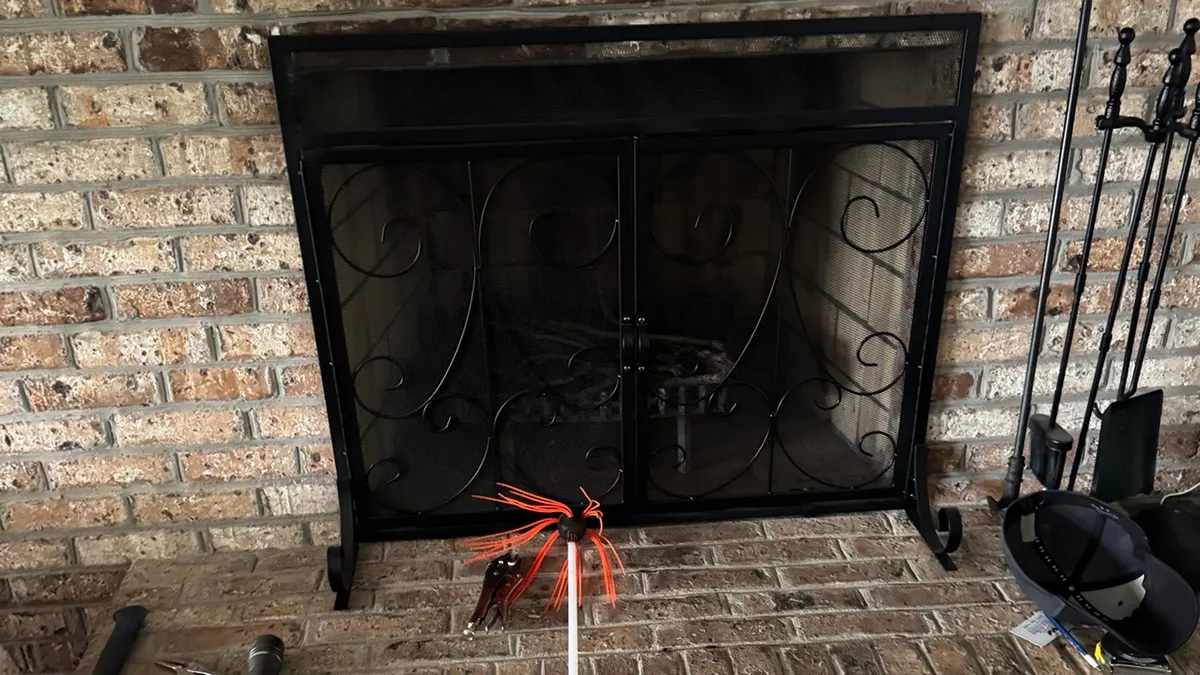
A proper sweep is more than running a brush up the flue. Our process starts with a visual inspection and a conversation about what you've been seeing, then careful preparation to protect your home, a full brushing of the flue, attention to trouble areas, and cleaning of the smoke shelf and damper. We finish with a post-cleaning inspection — including the chimney cap — a complete vacuum cleanup, and a clear summary of your chimney's condition. That's the standard every sweep should meet.
Need Help With This?
Our related service: Chimney Sweep & Cleaning — Complete chimney sweeping that removes soot, creosote and debris — careful preparation, a full brushing of the flue, and a spotless cleanup, so your fireplace is safe to use all winter.