Freeze-Thaw Damage: How Ohio Winters Crack Chimney Masonry
Water gets into brick and mortar, freezes, and pries the chimney apart a fraction at a time — dozens of cycles every Ohio winter. How to spot it early and stop it.
The short answer: water plus freezing is what breaks masonry
A brick chimney looks solid, but brick and mortar are both porous — they drink in rain, melting snow and even damp air, and hold that water inside the wall of the chimney. When the temperature drops below freezing, the water turns to ice and expands, pushing outward against the brick and the joints from the inside. One cycle does almost nothing you can see. The problem is the count. In the Ohio the temperature crosses freezing dozens of times between November and April — a thaw at noon, a hard freeze by midnight, again and again — and every cycle pries a hairline opening a little wider, lets a little more water in, and sets up a bigger push next time. That slow, patient process is freeze-thaw damage, and it is the single biggest reason Ohio chimneys crumble. The chimney itself is not failing because it is old. It is being taken apart, one winter at a time, by water that got in and froze.
The damage, in the order you will usually see it
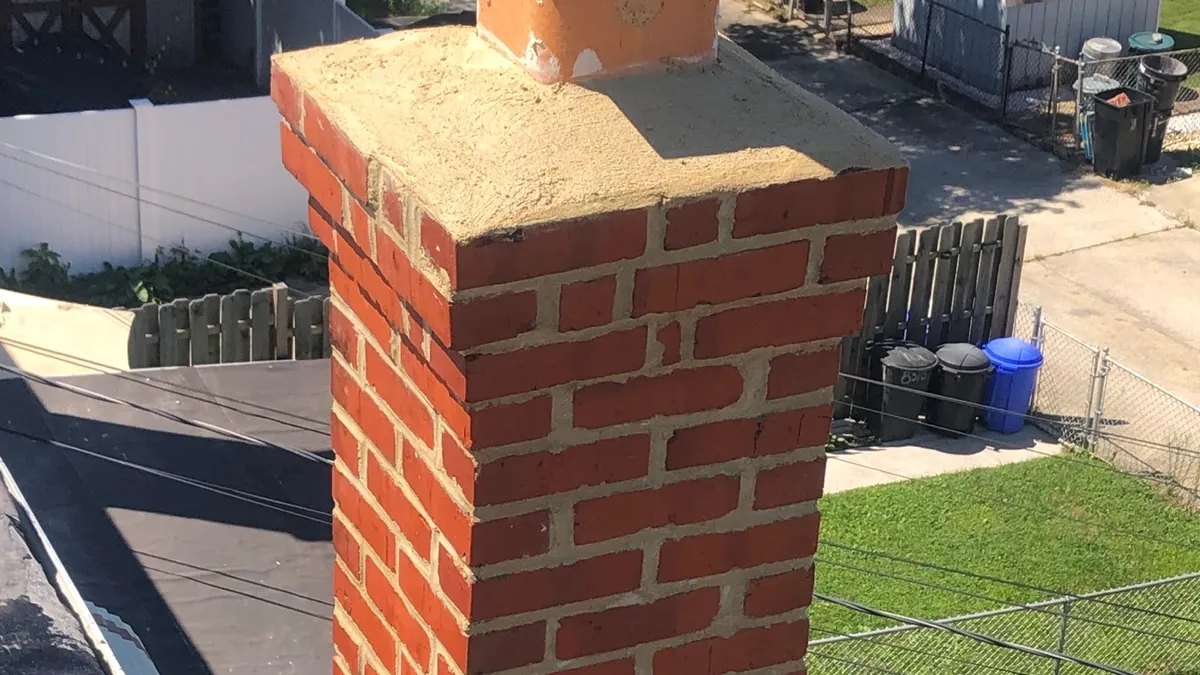
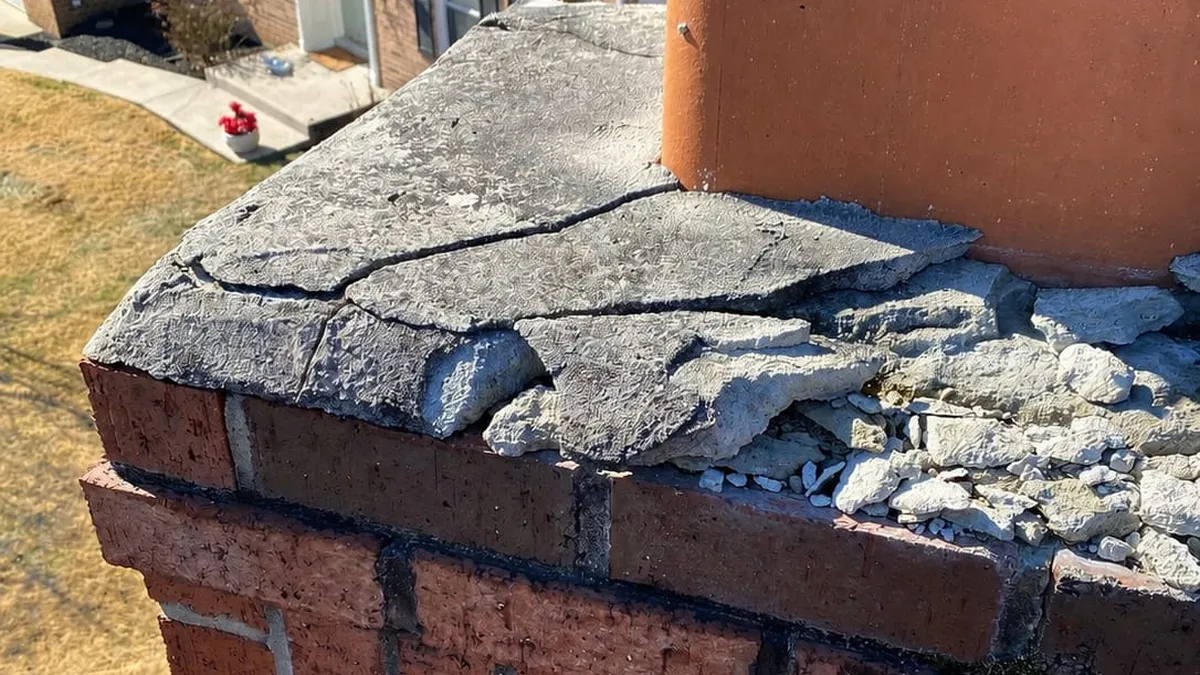
Freeze-thaw rarely starts with a dramatic crack. It starts with mortar. Joints that were once flush begin to recess, crumble when you rub them, or fall out as sand — that is the mortar giving up first, which is what it is designed to do. Next comes efflorescence, the white, powdery salt staining on the brick: proof that water is moving through the masonry, dissolving salts as it goes and leaving them on the face as it dries. Then brick itself starts to spall — faces flake, crack and pop off in thin layers, because the wettest part of the brick is the face, and that is where the freezing pressure is greatest. Higher up, the crown — the concrete cap on top of the chimney — cracks across its surface and funnels water straight down into the structure. By the time you see loose brick, a leaning stack or mortar crumbs in the firebox, the water has been working inside the wall for several winters, not one.
Why Ohio chimneys take the worst of it
Three things stack up here. The first is the climate itself: long winters, heavy snow that sits on crowns for weeks, spring melt that soaks masonry just as nights still freeze, and wind-driven rain that wets the exposed stack above the roofline far more than the walls of the house below it. The second is exposure — a chimney top lives in the harshest spot on the home, with no eave to shelter it, sun on one face and shade and ice on the north face. The third is the housing stock. Columbus neighborhoods like Highland Park, Como and Summit Hill and Dublin areas like Longfellow and Linden Hills are full of early-1900s homes whose original mortar is now soft with age and whose brick was never as hard-fired as modern brick. Post-war homes across Dublin, Westerville and the first-ring suburbs are reaching the same point now — sixty and seventy winters in. None of that makes damage inevitable. It means an Ohio chimney should be read for water entry every year, not only when a leak finally shows on a ceiling.
What actually stops it — tuckpointing, crowns and breathable waterproofing
Stopping freeze-thaw means stopping the water, in the right order. Start at the top: a cracked crown is repaired or rebuilt with a proper slope, overhang and drip edge so water sheds clear of the brick instead of soaking in, and a sound cap keeps rain and snow out of the flue itself. Next, the joints: tuckpointing grinds or rakes the failed mortar out to sound material and packs in fresh mortar matched to your brick in strength, color and profile, tooled so it sheds weather — smearing new mortar over cracked joints without removing them does not last a winter. Only once the masonry is sound does waterproofing earn its place, and it has to be the breathable, vapor-permeable kind made for chimneys: it lines the pores so rain cannot soak in, while still letting vapor escape. Ordinary paint or a film-forming sealer does the opposite — it traps moisture inside the brick, where freezing does even more harm. The exact price is confirmed in writing after we see your chimney — how much mortar has failed, how many bricks need replacing and how the roof is accessed all move the final number.
The honest safety note — and when to call
Here is the safety note, plainly: freeze-thaw damage is slow, but it is not only cosmetic. Open joints and spalling brick let more water reach the liner and the framing around the chimney, loose material at the top can fall, and a stack that has lost enough mortar is losing structural strength, not just looks. That does not mean a chimney with crumbling joints is an emergency tonight. It means it should not be given another five winters to get worse, because the repair grows with the damage — repointing sound brick is maintenance, rebuilding a failed stack is not. Timing helps you here: masonry work cures best in warm, dry weather, so summer is the ideal season for tuckpointing and crown work, with a fall inspection to catch what last winter opened up before this winter exploits it. If you can see recessed joints, white staining or flaking brick from the ground, that is already enough reason to have it looked at. Call Eagle Chimney Ohio at (614) 412-3139 or request a free estimate through our contact form, and we will photograph the top and the joints, explain what the water is doing, and quote the repair in writing before any work begins.
Related Services & Service Areas
Need Help With This?
Our related service: Masonry & Tuckpointing — Mortar is a chimney's sacrificial layer — it's meant to wear so the brick doesn't have to. We repoint failing joints and rebuild damaged masonry with matched materials, so the repair disappears into the chimney.