Chimney Relining in Ohio: How to Know When Your Liner Needs Replacing
The liner is the sealed passage smoke and gases travel through — and in older Ohio chimneys it is often cracked, shifted or missing entirely. The signs, and what relining fixes.
The short answer: the liner is the chimney's working surface
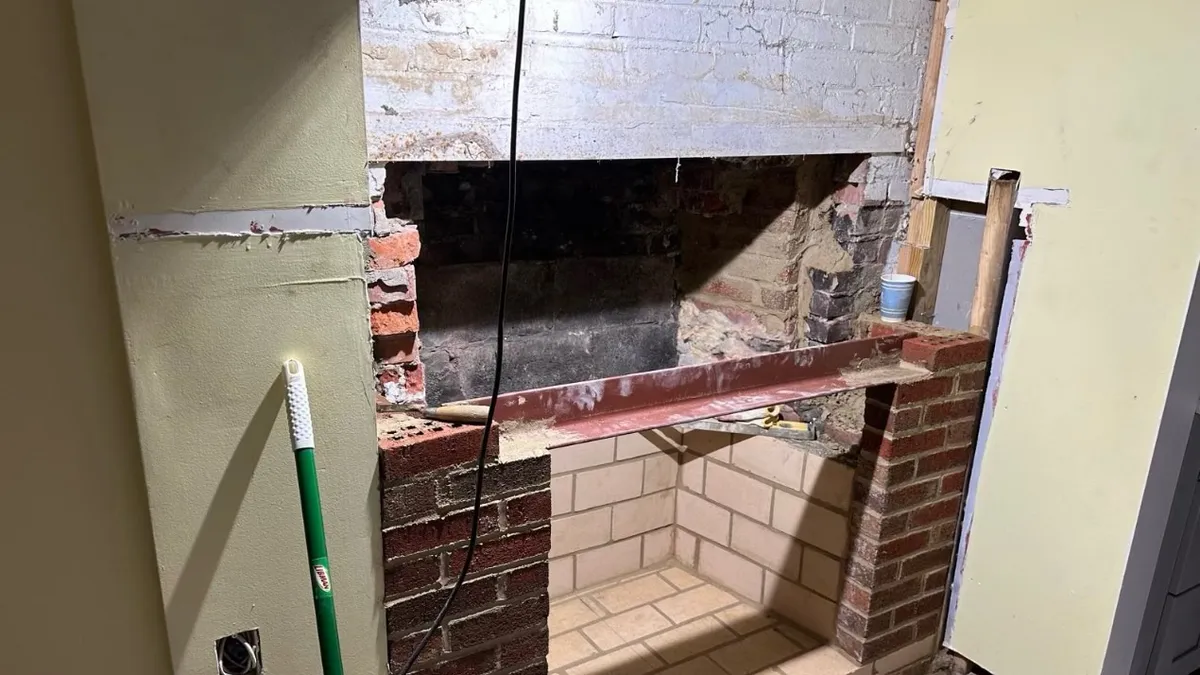
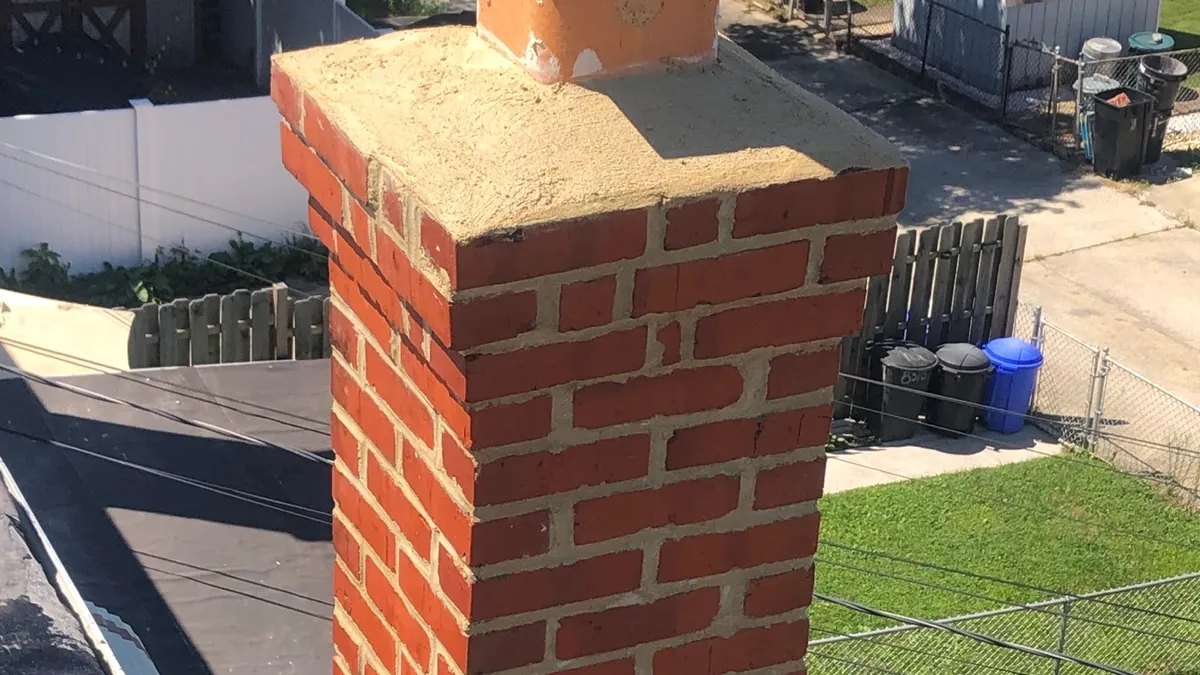
When most people picture a chimney, they picture brick. But the brick you see from the street is the structure — the part that actually handles fire, heat and exhaust gases is the liner inside it. The liner is a continuous, sealed passage running from the firebox or appliance to the top of the flue. Its job is threefold: carry smoke, carbon monoxide and other combustion gases safely out of the house, keep the heat of those gases off the masonry and the wood framing around the chimney, and protect the brick from the corrosive moisture flue gases leave behind. Older Ohio chimneys were lined with clay tiles stacked section by section, and some very old ones were never lined at all — just bare brick. Clay tile works well for decades, but it is brittle. When tiles crack, shift or lose the mortar at their joints, the flue is no longer sealed, even if the chimney looks solid from the driveway. Relining replaces that worn-out passage with a new, correctly sized liner — most often stainless steel — without rebuilding the chimney you see.
Signs your liner is cracked, shifted or missing
Liner problems rarely announce themselves dramatically, which is why they are so often discovered by a camera rather than by a homeowner. The most reliable sign is what a Level 2 video-scan inspection finds: cracked or flaking clay tiles, open joints between tile sections, tiles that have shifted out of line, or long stretches with no liner at all. There are clues you can notice yourself, though. Pieces of clay tile — thin, curved, terracotta-colored shards — in the firebox or at the cleanout door mean a tile above has broken. A fireplace that has started smoking or drafting poorly after years of behaving, soot staining in unexpected places, or a strong creosote smell that survives a sweep can all point to a flue that is no longer smooth and sealed. A chimney fire, even a small one you barely noticed, is a classic cause of cracked tiles — the sudden heat shock splits clay — so any chimney that has had one needs its liner checked before it is used again. And if you are buying or selling a home, a liner finding on the inspection report is one of the most common reasons a relining conversation starts.
Why Ohio wears liners out faster
Ohio is hard on the inside of a chimney in ways milder climates are not. Start with use: from November through March, Ohio fireplaces, stoves and the furnaces that share masonry chimneys run long and hard, and every heating cycle expands the liner with heat and contracts it again as it cools — thousands of cycles over a liner's life, working on every tile joint. Add freeze-thaw. Moisture from flue gases condenses inside a cold chimney, and water that finds its way into a hairline crack freezes, expands and pries the crack wider, dozens of times in a single winter. Then there is the housing stock itself. Columbus and Dublin are full of homes built in the early 1900s — Highland Park, Como, Longfellow and Summit Hill among them — whose original clay liners are now a century old, and plenty of chimneys from that era were built unlined. Post-war homes across Dublin, Westerville and the first-ring suburbs are reaching the age where their original tiles are cracking too. None of this means every old liner has failed. It means an old Ohio liner should be looked at with a camera, not assumed sound because the brick outside looks fine.
What relining actually involves — and what it costs
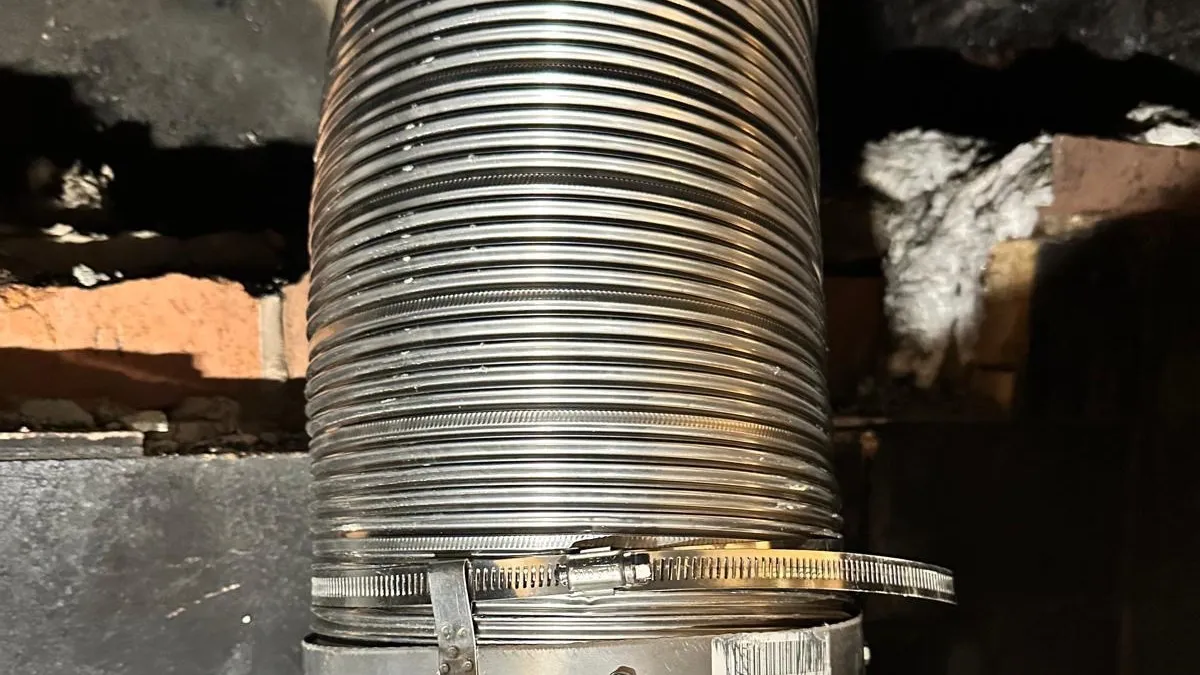
A relining job starts with measurement, not demolition. After a video scan confirms the liner's condition, the flue is sized to the appliance it serves — an open fireplace, a wood stove and a furnace all need different flue sizes to draft properly, and a wrongly sized liner causes smoke and buildup problems of its own. In most masonry chimneys the new liner is stainless steel: a rigid or flexible tube, matched to the flue, lowered from the top, connected at the bottom to the firebox or appliance, and sealed at the top with a plate and a cap. Insulation is wrapped or poured around it where the installation calls for it — it keeps flue gases warmer, which improves draft and slows creosote, and adds another layer of protection between hot gases and the masonry. Broken tile that would block the new liner is removed first. The exact price is confirmed in writing after we see your flue — height, flue size, how much broken tile has to come out and roof access all move the final number, which is why the inspection and written quote come before any work begins.
The honest safety note — and what to do next
Here is the safety note, plainly: a cracked or missing liner is not a cosmetic issue, and it is not one to watch for a season. Gaps in the flue let heat reach the masonry and, over time, the wood framing hidden around the chimney — and they give carbon monoxide and other flue gases a path into wall cavities instead of out the top. That does not mean a home with a tired liner is in danger tonight; it means the chimney should not be used hard and heavy until the flue has been scanned and you know what you have. If an inspection has already flagged your liner, do not light fires and hope for the best — get the relining quoted, in writing, and decide with the camera footage in front of you. And if nobody has ever looked inside your flue, especially in an older Columbus or Dublin home, a Level 2 inspection is the place to start: it turns a guess into a picture. Ready to find out what shape your liner is in? Call Eagle Chimney Ohio at (614) 412-3139 or request a free estimate through our contact form, and we will scan the flue and quote any relining in writing before work begins.
Related Services & Service Areas
Need Help With This?
Our related service: Chimney Relining — The liner is your chimney's safety core. When clay tiles crack or joints open, we reline with stainless steel systems or resurfacing treatments that restore a sealed, correctly sized flue.