Chimney Leaks in Ohio: Where the Water Gets In — and How to Stop It
A stain on the ceiling near the fireplace rarely starts in the ceiling. Water enters a chimney at the crown, the flashing, the mortar or an uncapped flue — here is how each leak is traced and stopped.
The short answer: a chimney leak is a roofline problem until proven otherwise
When a brown stain spreads on the ceiling beside a fireplace, or paint starts bubbling on the wall above the mantel, most homeowners blame the roof. Sometimes the roof is guilty — but on a masonry chimney, water has at least five ways in that have nothing to do with shingles: a cracked crown, failed flashing, mortar joints that have gone porous, brick that drinks in rain and snowmelt, and an open flue with no cap taking weather straight down the inside. Each entry point leaves different damage, and fixing the wrong one is why chimney leaks come back after a first repair. In the Ohio, late November is prime leak season: fall rain has soaked the masonry for weeks, freeze-thaw is opening every hairline crack wider, and snow on the crown melts a little every sunny afternoon. An Ohio chimney leak is diagnosable — but it has to be traced, not guessed at.
The five doors water uses — crown, flashing, mortar, brick and the open flue
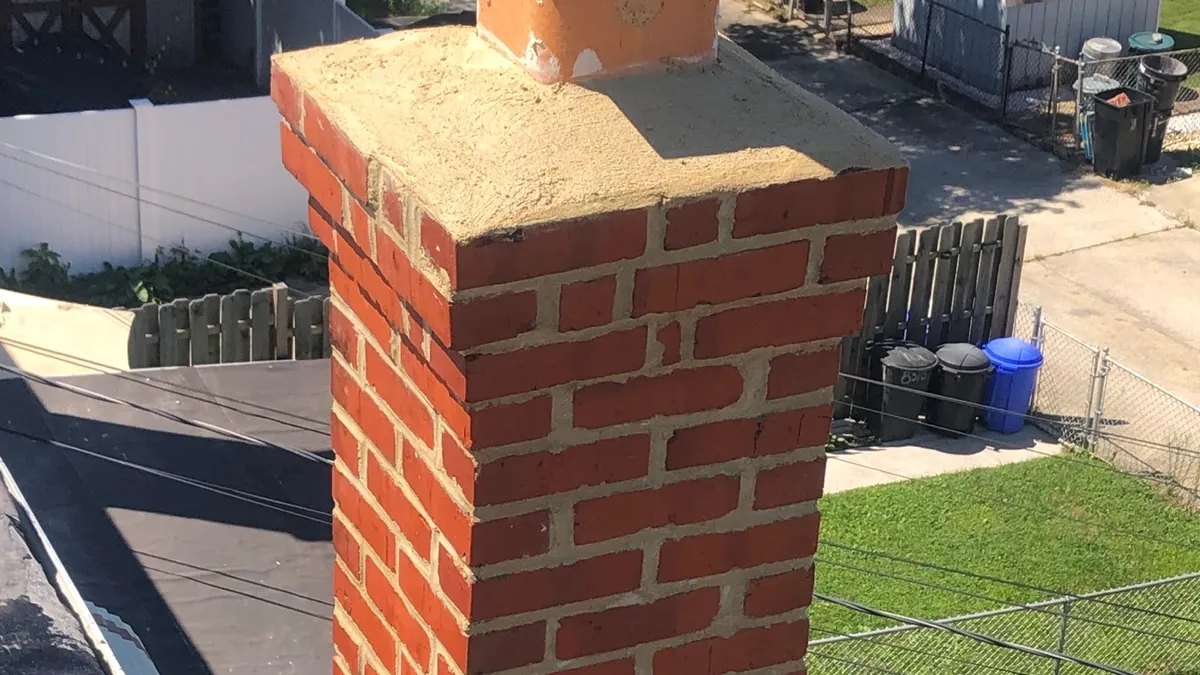
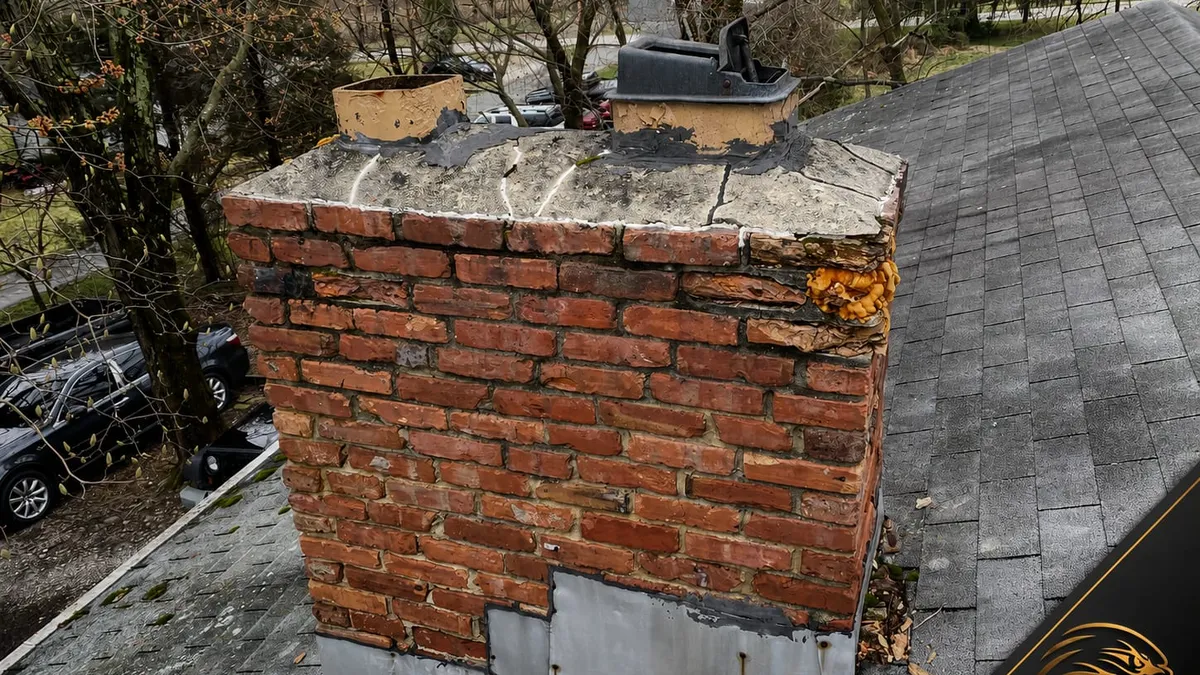
Start at the very top. The crown is the concrete slab that caps the chimney and sheds water off its edges; when it cracks — and freeze-thaw cracks almost every unprotected crown eventually — it stops shedding and starts funneling water straight down into the structure. Next is the flashing, the stepped metal sealing the joint where the chimney passes through the roof. Flashing rusts, lifts and separates, and then every rain runs into the roof deck and shows up as a ceiling stain that looks exactly like a roof leak. Mortar is the third door: sound joints shed water, but joints that have recessed, cracked or turned to sand let the wall of the chimney absorb rain like a sponge. The brick itself is the fourth — older, softer brick, common on early-1900s homes in Clintonville, German Village and the Short North, soaks up water and holds it, feeding the white efflorescence stains and spalling, flaking faces you can see from the ground. The fifth door is simplest: a flue with no cap is an open pipe into the house, and rain and snow falling into it rust the smoke shelf and damper from inside.
Reading the signs: what the stain, the smell and the rust are telling you
Leaks announce where they started, if you know the patterns. A stain on the ceiling tight against the chimney, worst after wind-driven rain, points first at the flashing. Damp firebox walls, rust streaks on the damper, or a puddle in the firebox after a storm point at the crown or the open flue above. A musty, damp smell around the fireplace that never quite leaves usually means the masonry itself is saturated — water coming through brick and mortar rather than through one dramatic hole. White powdery staining on the exterior brick is efflorescence: proof water is traveling through the wall and evaporating out of the face, carrying salts with it. And inside the flue, an unseen leak does quiet damage — water mixed with creosote forms an acidic slurry that eats at the mortar joints between liner tiles all winter. The honest limit is this: from inside the house, flashing failure, crown failure and saturated masonry can look identical. Separating them takes eyes on the top of the chimney and, where the flue is involved, a look inside it — which is why the findings are shown to you before any repair is quoted.
The fix, in the right order — and why waterproofing comes last, not first
Stopping a chimney leak means closing the doors in order, biggest first. A cracked crown is repaired or rebuilt with a proper slope and overhang so water sheds clear of the brick. Failed flashing is replaced and stepped into the mortar joints the way it should have been, not smeared over with surface sealant that peels in a season. Open mortar joints are tuckpointed — failed mortar ground out to sound material and fresh mortar packed in — because no coating can hold a joint that has already let go. A sound cap goes on the flue. Only then does waterproofing earn its place — and the kind matters. Chimney waterproofing is a breathable, vapor-permeable treatment that lines the pores of the brick and mortar so rain cannot soak in, while still letting moisture vapor escape from inside the masonry. Ordinary paint and film-forming sealers do the opposite: they trap vapor inside the brick, where Ohio freeze-thaw turns it into spalling damage. The exact price is confirmed in writing after we see your chimney — the size of the stack, its condition and roof access all move the final number. Spraying sealer over cracked crowns, dead flashing and open joints is the one approach that reliably fails, because it seals the exits while the doors stay open.
The honest safety note — and when a leak stops being just a leak
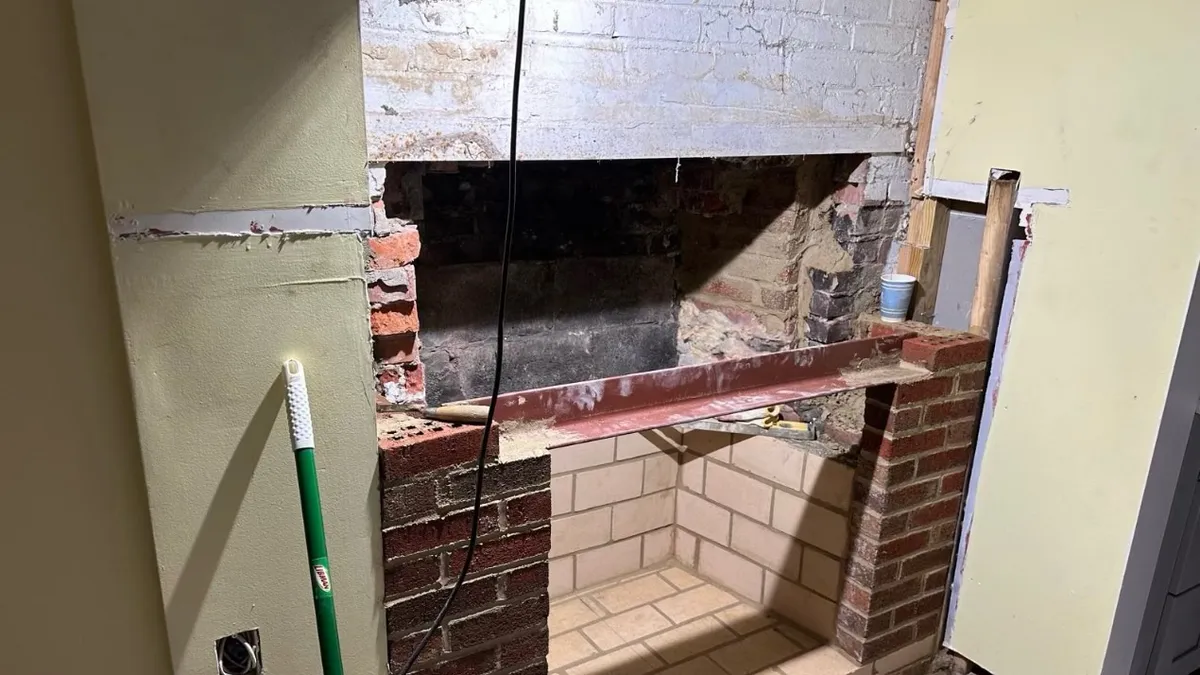
Here is the safety note, plainly: water in a chimney is not only a stain problem. Water reaching the liner degrades the mortar between tiles, and a flue with open joints can let heat and carbon monoxide reach places they should never reach. Water rotting the framing around the chimney is a structural repair that dwarfs the cost of the flashing that caused it. None of that makes a small leak an emergency tonight — but a leak ignored through an Ohio winter is a leak that freeze-thaw is enlarging every single week, and the spring version of the repair is almost always the bigger one. If you are seeing a ceiling stain near the fireplace, rust at the damper, white staining or flaking brick outside, that is enough evidence to act on. Call Eagle Chimney Ohio at (614) 412-3139 or request a free estimate through our contact form, and we will trace the water to its actual entry point, show you what we found, and quote the fix in writing — crown, flashing, joints and breathable waterproofing in the order that makes the leak stay gone.
Related Services & Service Areas
Need Help With This?
Our related service: Chimney Waterproofing — Brick drinks water; the right waterproofing stops it without sealing moisture in. We apply breathable, vapor-permeable masonry waterproofing that protects Ohio chimneys from freeze-thaw damage.