
Gas Fireplace Service & Repair in Mount Carmel — What to Expect
Gas fireplaces are sold as the maintenance-free option, and in a Ohio winter they earn their keep — instant heat at a wall switch, no wood to haul, no ash to empty. But 'low maintenance' isn't 'no maintenance': dust and pet hair clog burner ports, spiders nest in pilot assemblies, thermocouples wear out, and glass gaskets dry and crack. A gas appliance that isn't serviced drifts from convenient to unreliable — and because it burns fuel inside your home, its safety checks matter as much as its flame.
The Mount Carmel calls for gas fireplace service & repair we handle most involve ice and snow working on chimney crowns and chase covers, and the rust and water damage that show up at spring melt. Mount Carmel sits about 12 miles east of Cincinnati — In Clermont County, its housing mixes older brick colonials and mid-century ranches with newer subdivisions, so original masonry chimneys stand alongside factory-built fireplaces — all of them worked hard through Ohio winters — so our Mount Carmel route days are planned around exactly the chimney problems this housing stock produces.
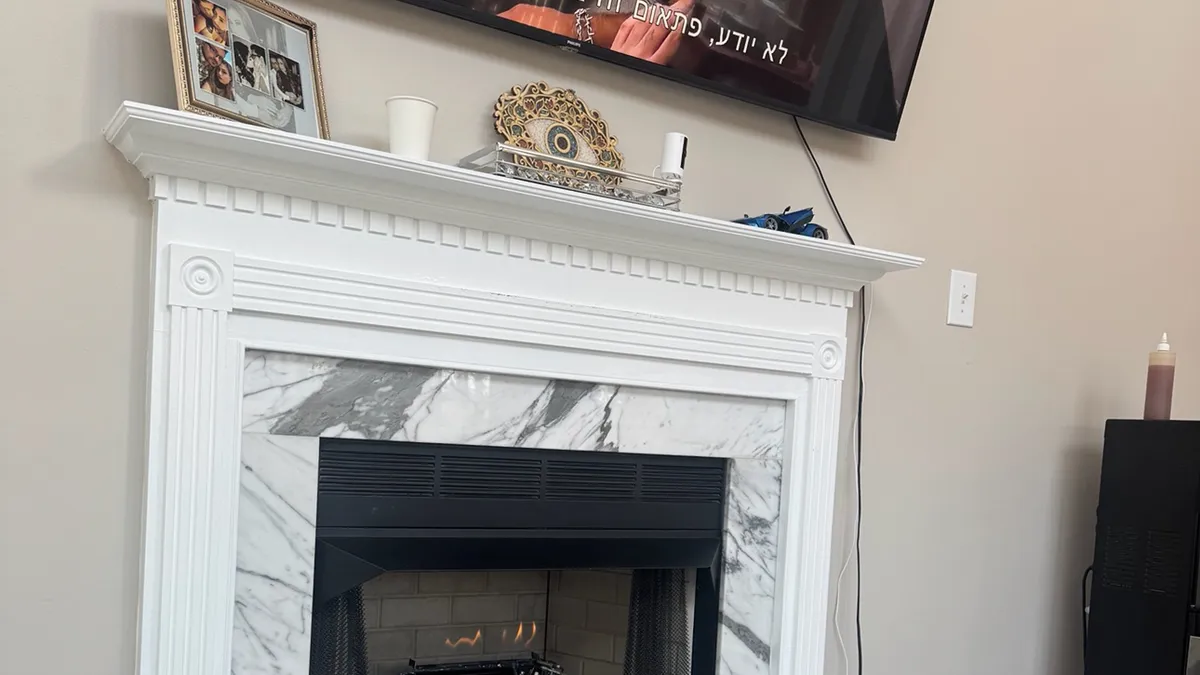
Gas Fireplace Inspection & Cleaning
An annual service visit restores the flame picture the manufacturer intended and catches the small failures while they're still small:
- Burner ports cleaned of dust, lint and corrosion
- Pilot assembly cleaned — including the air intake spiders love to nest in
- Glass cleaned inside and out; gasket inspected and reseated
- Gas logs inspected for cracking and soot tracking
- Ember bed and lava rock checked and repositioned
- Blower fan cleaned and checked for noise and vibration
- Venting and termination checked for blockages and damage
- Wall switch, remote and thermostat controls tested
Ignition & Pilot Troubleshooting
Most gas fireplace service calls are ignition calls. A pilot that won't stay lit is usually a thermocouple that has worn out or a thermopile that no longer generates enough millivolt power to hold the valve open — both are standard, replaceable parts. Electronic ignition systems fail differently: weak batteries in the receiver, a dirty flame sensor, or an igniter that clicks without lighting. Delayed ignition — the 'whoomph' a few seconds after the burner should have lit — means unburned gas is pooling before it catches, and that's a stop-and-call symptom, not a quirk. We test the components in order, replace what's actually failed, and verify a clean, immediate light before we leave.