
Chimney Relining in Oxford — What to Expect
Inside every masonry chimney is a liner — the channel that carries heat, smoke and gases safely out of your home while shielding the surrounding masonry and framing from that heat. When liners crack, gap or deteriorate, the chimney's safety system has a hole in it, even if the outside looks perfect.
The Oxford calls for chimney relining we handle most involve birds, squirrels and raccoons nesting in uncapped flues over the summer — and the blockages they leave behind. Oxford sits about 30 miles northwest of Cincinnati — In Butler County, its communities mix small-town brick homes, farmhouses and growing subdivisions, and its chimneys take the full Ohio cycle of hard burning, freeze-thaw and spring storms — so our Oxford route days are planned around exactly the chimney problems this housing stock produces.
Signs a Liner Is Failing
- Cracked, displaced or missing sections of clay tile, seen on a video scan
- Pieces of tile or flue debris appearing in the firebox
- Excessive creosote buildup that returns quickly after sweeping
- Smoke or odor problems that drafting changes don't fix
- A chimney fire in the chimney's past — liner damage is common and hidden
- An older chimney built before liners were standard, or with a deteriorated parged lining
- A new appliance whose venting requirements don't match the old flue
Relining Options, Explained Plainly
There is no single right answer for every chimney — there are three main approaches, and the honest choice depends on your flue's condition, shape and what it vents:
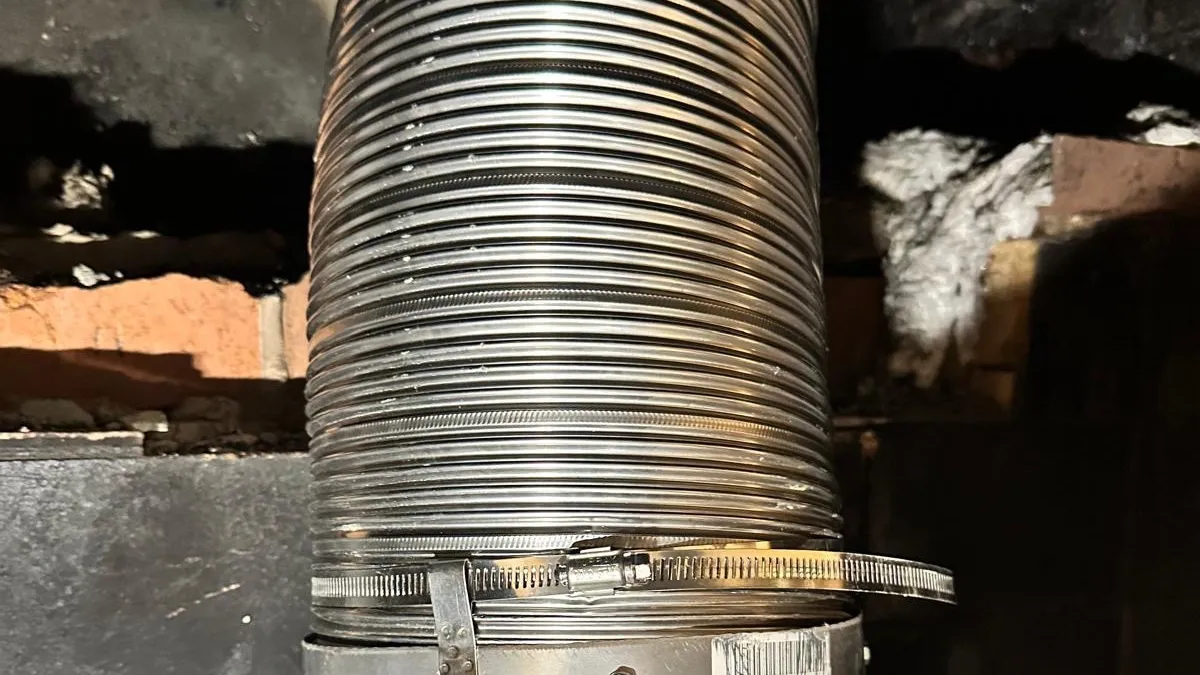
- Stainless steel liner systems — a new, continuous metal flue installed inside the chimney, correctly sized for the appliance, insulated where required. The most common and versatile solution.
- Ceramic resurfacing systems (such as HeatShield) — a refractory coating applied inside the existing flue that seals cracks and joints and rebuilds a smooth, continuous surface, restoring clay tile liners that are damaged but structurally intact.
- Cast-in-place liners — a poured refractory lining formed inside the chimney, used where the flue's shape or condition calls for a structural rebuild of the channel itself.