
Chimney Relining in Mount Vernon — What to Expect
Inside every masonry chimney is a liner — the channel that carries heat, smoke and gases safely out of your home while shielding the surrounding masonry and framing from that heat. When liners crack, gap or deteriorate, the chimney's safety system has a hole in it, even if the outside looks perfect.
The Mount Vernon calls for chimney relining we handle most involve ice and snow working on chimney crowns and chase covers, and the rust and water damage that show up at spring melt. Mount Vernon sits about 40 miles northeast of Columbus — In Knox County, its housing mixes older brick colonials and mid-century ranches with newer subdivisions, so original masonry chimneys stand alongside factory-built fireplaces — all of them worked hard through Ohio winters — so our Mount Vernon route days are planned around exactly the chimney problems this housing stock produces.
Signs a Liner Is Failing
- Cracked, displaced or missing sections of clay tile, seen on a video scan
- Pieces of tile or flue debris appearing in the firebox
- Excessive creosote buildup that returns quickly after sweeping
- Smoke or odor problems that drafting changes don't fix
- A chimney fire in the chimney's past — liner damage is common and hidden
- An older chimney built before liners were standard, or with a deteriorated parged lining
- A new appliance whose venting requirements don't match the old flue
Relining Options, Explained Plainly
There is no single right answer for every chimney — there are three main approaches, and the honest choice depends on your flue's condition, shape and what it vents:
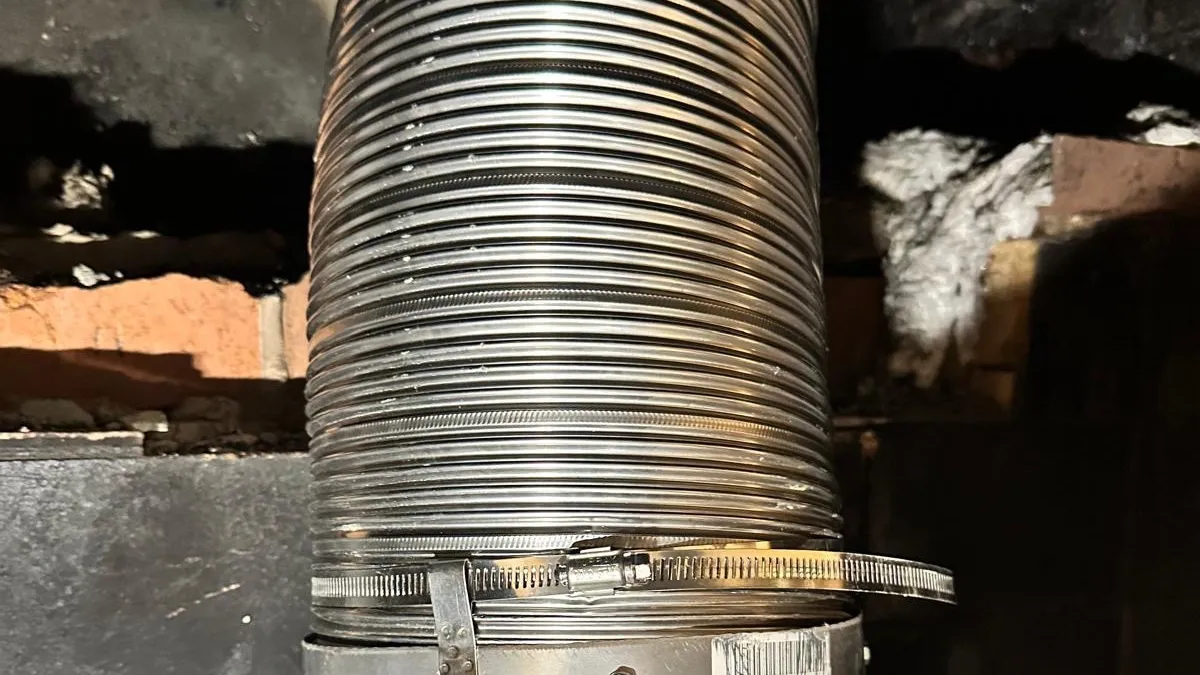
- Stainless steel liner systems — a new, continuous metal flue installed inside the chimney, correctly sized for the appliance, insulated where required. The most common and versatile solution.
- Ceramic resurfacing systems (such as HeatShield) — a refractory coating applied inside the existing flue that seals cracks and joints and rebuilds a smooth, continuous surface, restoring clay tile liners that are damaged but structurally intact.
- Cast-in-place liners — a poured refractory lining formed inside the chimney, used where the flue's shape or condition calls for a structural rebuild of the channel itself.